Skip to content


Aug
27
2010

South America Travel Guide: Literary Tours

Guidebooks are great, but if you really want to prepare for your next trip to South America, take a look at some of Latin America’s literary masterpieces before you board the plane. Buenos Aires becomes a much more romantic landscape through the eyes of Jorge Luis Borges in the 1920s, Peru more fascinating and mysterious from the social commentary of Mario Vargas Llosa, Columbia more passionate from reading Gabriel Garcia Marquez, Rio de Janeiro a city of erotic misadventures after entering the mind of Joaquim Maria Machado de Assis, and all of Latin America a crazy adventure when explained by your ridiculous, but poignant friend Maqroll the Gaviero, figment of brilliant Alvaro Mutis’ imagination.

The romance of Buenos Aires has inspired authors for centuries

The romance of Buenos Aires has inspired authors for centuries

Fervor de Buenos Aires, Jorge Luis Borges, Argentina

Fervor de Buenos Aires (Passion for Buenos Aires), published in 1923, is Borges first collection of poetry and, although not regarded as his best work, focuses on the neighborhoods of Buenos Aires after his return from living abroad.  Through his poems, readers can experience what Buenos Aires looked and felt like from the perspective of a young Borges, new to his native city after a long period of absence. Many of the landmarks, streets, and neighborhoods he mentions will be familiar as you tour Buenos Aires for the first time or, like Borges, as someone returning to a city you once knew with an entirely different point of view.

One Hundred Years of Solitude, Gabriel Garcia Marquez, Columbia

Obviously the most famous Latin American writer’s most famous work should appear on this list. If you haven’t read this epic, multi-generation tale about a fictional family in Columbia, you need to.  Tipping his hat to Borges by telling the story in a non-linear way, the author expertly weaves the lives of 7 generations of the Buendia family around central themes while throwing in more than a dash of magical realism. While you tour South America, perhaps you can take a tip from Marquez and create a magical land based on your own perceptions.

The Posthumous Memoirs of Bras Cubas, Joaquim Maria Machado de Assis, Brazil

There’s nothing like hearing the tales of scorned loves and bitter romances from a man buried 6 feet under, which is exactly what you get from reading this pessimistic, hilarious, and erotic novel written in 1881. It begins with the fictional deceased author dedicating his memoirs to the worm which took the first bite out of his corpse, and only gets more uplifting from there.  Influenced heavily by Schopenhauer’s World as Will and Representation both in personal philosophy and form, Assis manages to defuse his pessimism with comic relief. Although a story told from the perspective of a dead man may be old hat now, in 1881 it was considered avant-garde and it has still managed to hold up to the ultimate test – the passage of time.  Travelers can get a new perspective on life before their Rio de Janeiro tour, which is the setting of this famous literary masterpiece.

Life in the Peruvian Andes is a common theme for Vargas Llosa

Life in the Peruvian Andes is a common theme for Vargas Llosa. Photograph: Matthew Barker 2010

Death in the Andes, Mario Vargas Llosa, Peru

Both famed and prolific, Mario Vargas Llosa is easily one of the most well-known and talented South American writers. He also once punched his former friend Gabriel Garcia Marquez in the face to the delight of literary lovers worldwide who still enjoy the image of writers as brawling, passionate lunatics. In the center of Death in the Andes, a social critique thinly disguised as a detective thriller, is Corporal Lituma, Vargas Llosa’s main character, from the northern town of Piura sent to the mountains to investigate the strange disappearances occurring in this small Andean village. What initially seems like an open and shut case becomes a monumental mystery of epic proportions where myth and legends seem just as real as facts and political upheavals. Although you won’t be punching anyone or investigating murders on your Peru vacation (at least if we have anything to do with it) perhaps you can learn more about the legends and myths which create the rich cultural fabric of the Andes.

The Adventures and Misadventures of Maqroll, Alvaro Mutis, all of South America

The Adventures and Misadventures of Maqroll, written by Columbian author Alvaro Mutis, has one of the best protagonists ever written, Maqroll the Gaviero, who is constantly compared to Don Quixote because of his unrealistic undertakings.  Full of love affairs, strong friendships, crazy characters, and evocative descriptions, this hefty novel is a good book to bring with you on your trip as it may take you a good few weeks to get through the 700 plus pages. Universal in thought, regional in its various settings, and wildly entertaining, this book is a great glimpse into Latin American heroes.

Custom tours of all these destinations and more can be arranged.  Please contact us to speak to one of our travel advisors for more information.

  • Share/Bookmark

Posted in Argentina, Brazil, Culture, Peru.

Tagged with , , .


Aug
20
2010

Ecuador Travel Guide: Off the Beaten Track in Quito

If you have a few days in Quito on either end of your Galapagos tour, but don’t want to hit the usual tourist attractions, you may be wondering  where you can go for a rewarding experience a bit off the beaten path. Wonder no more, as the list below should give you some good options.

Day Time

Monastery Purchases, Quito, Ecuador

Monastery Shopping Madness

Most of the convents in Historical Quito have a small gift shop where you can buy interesting goodies made by cloistered nuns.  Although the nuns specialize in homeopathic remedies made from plants and herbs prominently displayed at the front counters, head instead to the other cabinet filled with wines and anise flavored mistela to discover the secret way the locals plump up the collection plate. If you don’t drink, other good finds include homemade cookies, and desoured lemons filled with caramel crème. The best part is that most of your purchases will feature handmade nun labels, which makes them excellent and unusual gifts.

Monasterio de Carmen Alto, Calle Rocafuerte and Garcia Moreno

Clothing Market

Leave your wallet at home, but do bring some cash to this sprawling market full of Quitenos bartering for legitimate and not so legitimate brand name clothing. This market isn’t for the faint of heart, or for those who suffer from claustrophobia.  The narrow passageways are packed with people and it quickly becomes apparent that what looks like an indoor market is actually an outdoor market enclosed by various tarps covering hundreds of stalls and spread out across almost 3 blocks, giving it an alleyway, maze-like feel. You are likely to be the only traveler there, so try not to stand out or look bewildered, and definitely don’t wear a fanny pack!

Centro Comercial Parqueadero La Merced,  Calle Chile and Calle Imbabura.

Guayasamin Museum

Located in beautiful Bellavista, a charming residential neighborhood in the eastern hills of Quito, sits the Guayasamin Museum, once home to Ecuador’s most famous painter Oswaldo Guayasamin.  The museum houses some of his most beautiful work meant to represent the strife and injustice suffered by the indigenous workers in Latin America. The painter’s own art collections, a staggering representation of both colonial art and pre-Columbian ceramics, are inside different rooms in the museum as well.  After you wander through the galleries, you can visit La Capilla del Hombre, Guayasamin’s final vision illustrating both man’s cruelty and potential. Then spend the afternoon strolling through this picturesque neighborhood and up to stunning Guapulo, full of small winding roads and lovely vistas. Wear your sneakers as the roads are steep!

Calle Jose Bosmediano 543, at Jose Carbo. Capilla del Hombre: Mariano Calvache y Lorenzo Chavez Esquina

Night Time

La Ronda Street

Misinformed guidebooks still warn tourists away from this area at night which is a real shame considering it is the only nightlife in Centro Historico. This pedestrian only, cobblestoned road is one of the oldest in Quito and incredibly picturesque with flower-filled balconies, colonial architecture, wrought iron gates, and artist’s galleries.  The best time to visit is Friday and Saturday nights after 7pm when all the restaurants, cafes, bars, and art galleries are open and people sell hot canelazo from doorways. Hundreds of people flood the streets to hear live music, socialize, and sample the homemade wine.  Street performers and dancers normally make an appearance around 9pm. There are policeman at either end of the street happy to help tourists flag a taxi.

Calle La Ronda, Centro Historico

El Pobre Diablo

Easily the coolest venue in Quito, this small jazz club hosts live music a couple days a week and is the perfect place to sit back and enjoy local and international musicians, while knocking back a few whiskeys or glasses of vino. This bohemian club doesn’t get the music started until after 10pm and shuts down around 2am. If you really are a poor devil keep in mind that they charge a small cover fee and drinks are a bit pricier than usual.

Isabel La Catolica, and Galavis, La Floresta

  • Share/Bookmark

Posted in Galapagos Islands.

Tagged with , , .


Aug
20
2010

Argentina Travel Guide: Top Patagonia Tours

Patagonia’s remote beauty evokes the romance of isolation like nowhere else on earth. Its ice-carved landscapes and endless glacial wilderness, dense forests and fiercely jagged mountains, isolated outposts of humanity and hardy survivors living in self-exile from their more hospitable homelands; all testimony to Bruce Chatwin’s timeless description:

“Patagonia is the farthest place to which man walked from his place of origin. It is therefore a symbol of his restlessness.”

These days Patagonia is much more accessible to visitors and with a well established network of excellent hotels, lodges, and transportation, it is easy to explore these wild lands during an Argentina vacation.

Chalten tours, Patagonia tours, Argentina travel

Mount Fitz Roy dominates the picture-book Chalten landscape. Photograph: Matthew Barker 2010

Hiking the Mountain Trails in El Chalten

For lovers of the great outdoors, there are few places on the planet’s surface more dramatic and appealing than the vast mountainous landscapes of El Chalten in southern Patagonia.

Home to the famous Mount Fitz Roy, picture-book Alpine forests, glacial lakes, and almost endless stretches of flowering meadows and grasslands, Chalten is an uninhabited wilderness with pristine, undisturbed terrain.

Described as the trekking capital of Argentina, Chalten is ideal for hikers of all abilities. Easily navigable trails lead through the forests, connecting a series of well maintained campsites, all with fresh running water delivered directly from the glaciers in the mountains above. Day excursions are easy from the town of Chalten, and travelers can take guided treks through the mountains and even onto the glaciers.

There are a number of excellent Chalten hotels available, including Alpine-style lodges and homey hosterias. Some hotels offer relaxing spa services, ideal after a long day out in the mountains, and all have restaurants serving the classic and delicious Patagonian dish of flame-roasted lamb.

Calafate tours, Patagonia tours, Argentina travel

The end point of the vast Perito Moreno Glacier, Calafate. Photograph: Matthew Barker 2010

Tackle the Glaciers of Calafate

The larger and busier Calafate, just across Lake Argentina, is a bustling town that has managed to retain its frontier charm. Calafate is sandwiched between the vast lake and the typically sparse plains of Patagonia that stretch off into the distance until meeting the snowcapped mountains on the horizon.

The town’s principal attraction is its proximity to Glaciers National Park, a breathtaking collection of ice flows snaking down from the Southern Continental Ice Field and into the tranquil lakes below.

The glaciers can be explored from the decks of comfortable catamarans that sail travelers almost within touching distance of the glacier wall. Occasionally great shards of ice can be seen splitting and crashing into the water below.

The more adventurous can tour the glaciers themselves on a guided one-day trek that leads into the heart of the vast ice river; a surreal and almost alien environment of absolute tranquility.

There are a wide range of Calatafe hotels and the town is also well known for its chocolate shops and excellent restaurants. Be sure to try roasted lamb marinated with the famous Calafate berry. Local legend states that if you try the berry, you will return to Patagonia again.

A Cruise from the Ends of the Earth

At the farthest tip of Patagonia is the Tierra del Fuego, land of fire, named by the first European explorers who noted the eerie coastal fires set by the indigenous populations. Ushuaia is the regional capital and the southernmost city on Earth, perched perilously on this distant tip of South America.

Despite its remoteness, Ushuaia is a thriving city set amongst a rugged coastal landscape. The port town is a popular starting point for Patagonia cruises leading through the spectacular archipelago between Argentina and Chile. These tours include charting the Beagle Channel, made famous by Charles Darwin’s voyage two centuries ago.

The four day cruise from Ushuaia to Punta Arenas passes Tierra del Fuego and rounds Cape Horn before navigating the countless islets on the route towards Punta Arenas on the Chilean side of Patagonia.

Expert guides are on hand to explain the spectacular natural landscapes unfolding on all sides, while onboard chefs cook up a feast for each and every meal. From Punta Arenas, passengers can either fly back to the Argentinean side or extend their vacation with a Chile tour.

Puerto Madryn tours, Patagonia tours, Argentina travel

Puerto Madryn's famous inhabitants, Patagonia

Watery Worlds at Puerto Madryn

The charming seaside town of Puerto Madryn sits at the head of the Valdez Peninsula where an enormous coastline of rugged cliffs, reefs, and coves harbor an astonishing wealth of marine and bird life.

A UNESCO World Heritage Site, the peninsula is home to colonies of elephant seals, sea lions and southern right whales, but by far the most famous and popular inhabitants are the huge colony of Magellan penguins that flock the coastline.

But Puerto Madryn’s most peculiar claim to fame is the town’s origins. Originally founded by a small group of Welsh settlers seeking a better life in the New World, the Welsh language can still be heard alive and well on the town’s streets and in the many traditional Tea Shops that have survived and flourished.

Getting Around

Argentinean Patagonia is a vast and varied terrain. Road transportation is feasible between the closer destinations such as Calafate and Chalten, but for longer distances visitors should consider air travel. Ushuaia, Calafate, and Puerto Madryn all have connections to each other and Buenos Aires, with regular services for most of the year.

There really is no wrong time to visit Patagonia, but it depends on what you want to do. The winter months get very cold and traveling between June and July is difficult. However, this is the best time of year for the many snow enthusiasts who flock to the mountain towns of Bariloche and Cerro Catedral to hit the slopes. Whether you are a photographer, hiker, wildlife lover or want to plan an Argentina skiing trip with friends, Patagonia is one of the most spectacular and inspiring landscapes to serve as your backdrop.

  • Share/Bookmark

Posted in General.


Aug
09
2010

Argentina Travel Guide: The Annual Buenos Aires Dance Competition

If you are travelling to Buenos Aires this August, you are in for a treat. There is only one thing that Porteños are as passionate about as they are about football: dance. For the rest of August, all eyes in Buenos Aires will be on the dancers performing in the 8th Annual Dance World Championship and the Festival de Tango 2010.

Buenos Aires tours argentina tours argentina vacations argentina for less

From August 13-31st, the Dance World Championship and the Festival de Tango offer thrilling performances, exhibitions, classes, concerts, films, vintage radio shows, and just about everything else related to that sizzling and sensual dance, the tango – and many of the events are free.

Participating theaters include the 25 de Mayo, the Alvear, the De la Ribera, the Coliseo, the Luna Park, La Trastienda, the Recoleta Cultural Center, the Planetarium, and the Punto de Encuentro on Bartolome Mitre Street. Tickets are free and you can pick up one or two at the Casa de la Cultura on Avenida de Mayo.

Featured concerts and musicians include Rubén Blades and the Leopoldo Federico orchestra, set to play salsa on August 30 in Luna Park, plus Horacio Salgan and the Real Quintet.

Milongas, or ballrooms, all around the city will host couples eager to dance their way to the championship in the Tango Capital of the world. Between August 6-16, qualifying couples who make it through 10 rounds will make their way into the semifinals, to be held August 19-20. The winning round will be held on the 22 at Teatro del Colegio San Jose.

If you are planning a Buenos Aires tour after August, you are sure to find Porteñas and tango houses bustling with pairs of passionate dancers. The Esquina Carlos Gardel is an especially popular tango house located in the barrio of Abasto, where the famous singer Carlos Gardel spent much of his life. During a delicious Argentine dinner, you can watch tango dancers performing the dazzling dance.

  • Share/Bookmark

Posted in Argentina, Spotlight On.

Tagged with , , , , , .


Aug
02
2010

Galapagos Islands Rewarded for Conservation Efforts

Pioneering efforts to protect the fragile and unique biodiversity of the Galapagos Islands have been rewarded by the UNESCO World Heritage Committee, with the removal of the islands from the “List of World Heritage in Danger.”

The Islands, described as a “living museum and showcase of evolution” were famously explored by Charles Darwin, and have since become a world famous beacon for the magical diversity of natural life on planet earth.

Pristine beaches on the Galapagos Islands which have been recognised by UNESCO

Pristine beaches on the Galapagos Islands which have been recognised by UNESCO

The archipelago is famed for its rich collection of endemic species which evolved in total isolation from other creatures, making them a unique environment and immensely important to biological science, as well as fascinating to visitors who can explore the islands on Galapagos Island cruises or land-based island hopping tours.

However, the Islands were added to the Danger List in 2007 due to the risks to the pristine environment created by introduced species, unmanaged tourism and unsustainable fishing of the nearby seas.

However, a pioneering plan by the Ecuadorian government has successfully addressed each of these problems, allowing the development of a more sustainable model to tourism on the Islands.

Conservation projects include the successful reintroduction of a threatened species of tortoise, and efforts to limit the impact of human inhabitants, including 190,000 tourists each year. The human population had been responsible for various significant problems, including pollution, oil spills, the introduction of invasive species and even poaching of rare and endangered species.

The World Heritage Committee voted 15-4 to take the Islands off the Danger List, in a motion cast by the Brazilian delegation. The Danger List allows UNESCO sites to draw upon additional United Nations resources and places pressure on national governments to take action and protect sites of global natural, cultural or historical importance.

Other UNESCO sites in Latin America that have been removed from the Danger List thanks to proactive conservation management include Sangay National Park, also in Ecuador and Iguazu National Park in Brazil.

  • Share/Bookmark

Posted in Adventure, Galapagos Islands, Travel Advice, Travel News.

Tagged with , , .


Jul
27
2010

Bolivia Travel Guide: Lake Titicaca Catamaran Tours

If you are planning a Lake Titicaca tour, an excellent way to explore the beautiful Lake Titicaca is to take a catamaran tour. A Lake Titicaca catamaran tour is also a great way to transition between Bolivia and Peru during your Latin America vacation.

Located on the border of Peru and Bolivia, Lake Titicaca is the legendary birthplace of the Inca Empire. This brilliantly blue lake, the highest navigable lake in the world, is famous for its floating islands. On handmade islands crafted from reeds, the people of the Uros islands have carried on the reed-crafting tradition of their pre-Inca ancestors.

Isla del Sol Bolivia tours Peru tours Lake Titicaca Tours

The waters of Lake Titicaca, the birthplace of Inca legends, shimmer around the Isla del Sol

But any visitor to Lake Titcaca would be remiss to miss out on the Bolivian side of the lake, where the founder of the Inca, Manco Capac, first appeared on the Isla del Sol. On the island are pre-Colombian ceremonial temples, such as the Sun Temple and the Chinkana maze.

Also on the Bolivia side of the lake is the Copacabana peninsula, which shelters many more significant Inca landmarks. Situated just outside of the town of Copacabana, the Horca del Inca, an astronomical observatory, was constructed thousands of years ago.

On the island of Suriki live master reed craftsmen, including shipbuilders who helped the Norwegian scientist Dr. Thor Heyerdahl build rafts to sail across the Pacific Ocean. In the 1970s, Heyerdahl and his team successfully navigated from North Africa to the Pacific Islands in reed rafts, showing that early ocean migrations were possible. On the Isla del Sol is Inti Wata museum that discusses these navigations in depth.

There are a number of Lake Titicaca tours, including a full day catamaran tour. Beginning in Puno on the Peruvian side of the lake, travelers head to Copacabana in the early morning. A guide takes travelers around this Bolivian town, visiting the cathedral and main square, before setting out on the catamaran lake cruise that either returns to Puno or ends in La Paz, Bolivia.

Once the ship reaches Isla del Sol, travelers can get out an explore this fascinating island full of Inca landmarks. A guide will show the Inca garden, stairs, and fountain, and then give a tour of the Inti Wata complex, a museum full of archeological and anthropological items that recount the rich history of this lake region. It’s also possible to partake in a ceremony of the Kallawaya people, who are known for their mastery of natural medicine.

Next the cruise continues to the south side of Isla del Sol, where a guide will give a tour of the Pilkokaina Inca Palace. Visitors will also get a chance to watch a sailing demonstration, in which sailing experts show how to navigate their handmade reed vessels.

Visitors can enjoy lunch onboard the cruise while the ship continues on to the Chua harbor on Bolivia’s shores. From there, travelers will take a bus to La Paz, the governmental capital of Bolivia and linchpin for Bolivia tours.

There are many versions of this Lake Titicaca catamaran tour available, including a 2D/1N cruise that includes a trek around Isla del Sol, a Puno roundtrip tour, and a La Paz round trip tour. Check out our other recommended Bolivia tours, Puno and Lake Titicaca tours, or contact us to talk with one of our travel advisors if you have any questions.

  • Share/Bookmark

Posted in Bolivia, Peru.

Tagged with , , , , .


Jul
20
2010

Top Five Most Unusual Argentina Tours

With its enormous diversity in landscapes and culture, there are an almost limitless range of Argentina tours to choose from, but here are five ways to see the best sights – in totally unique ways.

Buenos Aires: Tigre Cycling and Kayaking Tour

Take a Buenos Aires tour with a difference, enjoying the “Paris of South America” by bike and kayak along the Tigre River Delta.

Just north of the thriving bustle of the Argentine capital lies the tranquil town of Tigre nestled on the banks of the Tigre River Delta. The summer home for Buenos Aires’s Porteñean elite in the 19th century, Tigre retains its posh flair. Stately mansions decorate the delta, many of them only accessible by boat.

The tranquil waters of Tigre, near Buenos Aires. Photograph: Matthew Barker 2010

The tranquil waters of Tigre, near Buenos Aires. Photograph: Matthew Barker 2010

Take the train from the heart of Buenos Aires to its northern outskirts. From there you can cycle along the backroads and suburbs to the town of Tigre, just north of the capital. Along the peaceful and relaxing biking trail, you will pass the Tigre River’s lush islands and beautiful landscapes. When you reach the town of Tigre, you will hop in a kayak and take a guided tour past the mansions, palaces, and other landmarks.

This full day tour lasts about eight hours total. The guided tour includes all biking and kayaking equipment, train tickets and traveler’s insurance, plus lunch, snacks, and bottled water.

Iguazu Falls: Full Moon Waterfall Excursion

Enjoy a night-time Iguazu tour and enjoy the majestic falls by moonlight.

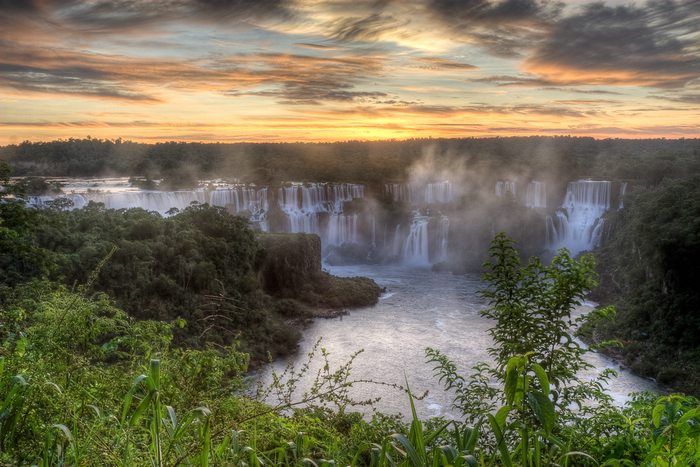
The thundering Iguazu Falls, Argentina

The thundering Iguazu Falls, Argentina

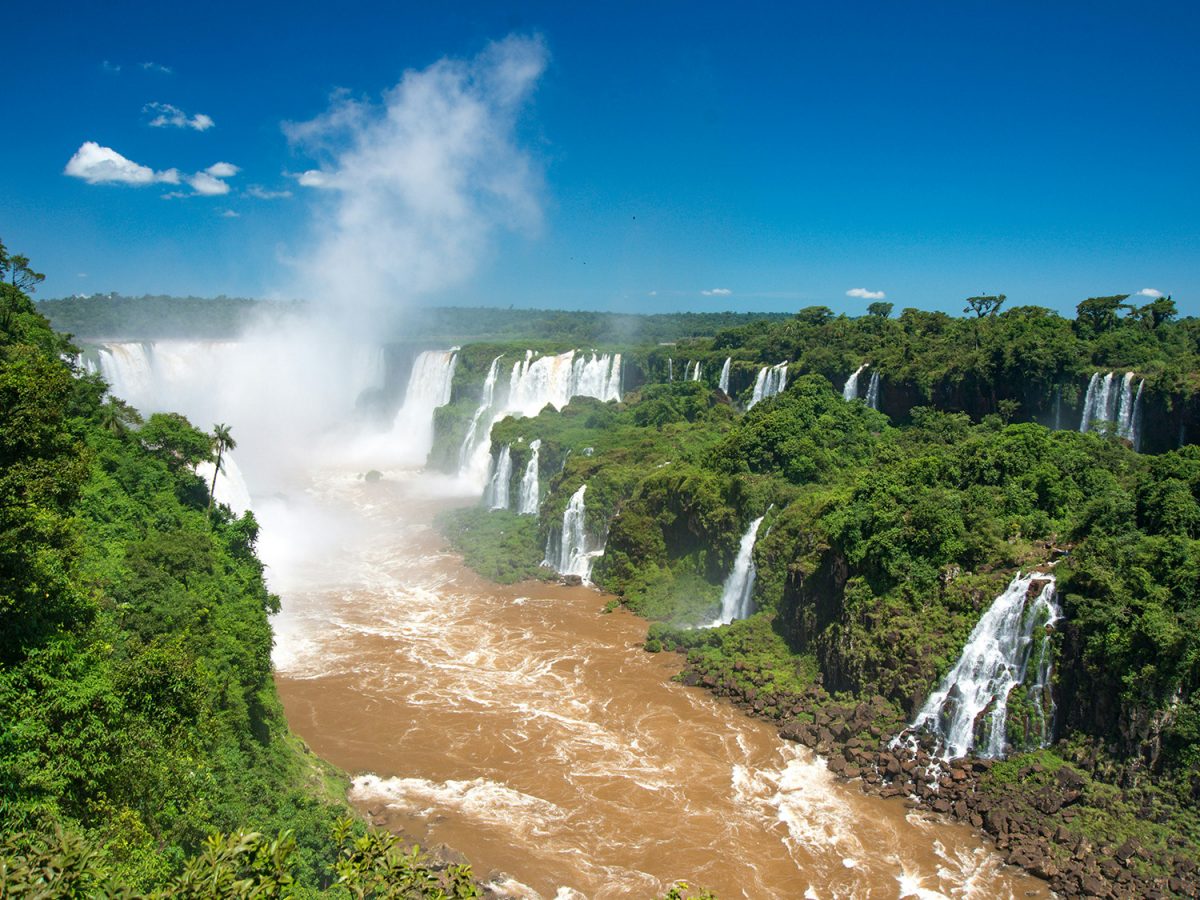
When the full moon is out, the Iguazu Falls – one of the world’s most impressive set of waterfalls – appears even more striking and powerful than ever. Some 270 waterfalls, a few over 250 feet tall, merge together to cascade down the Iguazu River’s deepest cataracts.  The national parks surrounding the falls, in both Argentina and Brazil, are quiet, and it seems as though you are alone with a mighty wall of water.

During this tour, which runs every evening of the full moon, you meet your guide at the park entrance to take a train ride to the Devil’s Throat, the most impressive face of the falls. At the Garganta do Diabo, or Devil’s Throat, water plunges over a 490 by 2300 feet U-shaped catarata, and observers can get close enough to be surrounded by 260° of water thundering with unimaginable power. In the moonlight, toast this remarkable force of nature with a refreshing caipirinha cocktail.

Mendoza: Cooking & Wine Tasting Class

For wine and cuisine fanatics, look no further than this Mendoza tour.

Mendoza’s gorgeous wineries and breathtaking landscapes are not to be missed, but if you want to experience Mendoza wine country in a unique way, take a Mendoza cooking and wine tasting class.

Begin your class by traveling from Mendoz to the Uco Valley, a high-altitude vineyard-rich region backed by the snowy Andes. Here the restaurant Bistro La Tupiña is situated in the midst of the Altus vineyards. This world-class restaurant serves delicious, simple Argentine meals – with some ingredients straight from the farm out back. The chef uses a tupiña, a cast iron kettle for which the restaurant is named, to marinate sausage, carmelized onions, potato wedges, and other appetizers in wines from the vineyard. A wine tasting expert will spill the secrets about the ins and outs of a good glass of wine, and a professional chef will teach you how to prepare – and pair – gourmet Argentine dishes with the best Argentine wines. Recipes may include goat in lemon sauce, barbeque lamb, along with dulce de leche and pastries.

El Calafate: Upsala Glacier Boat Cruise to Estancia Cristina

Cruise across glacial lakes on this Calafate tour to the most remote estancia in the region, perhaps in all of Patagonia.

The rugged landscape of Argentina’s Patagonia attracted rough gauchos who raised their cattle on vast stretches of land. Of all the estancias in Argentina, from the ranches on the eastern pampas near Buenos Aires, to those on the southern steppe, Estancia Cristina near El Calafate is perhaps the most remote.

Walls of ice and glacial lakes in Calafate, Patagonia. Photograph: Matthew Barker 2010

Walls of ice and glacial lakes in Calafate, Patagonia. Photograph: Matthew Barker 2010

Estancia Cristina is only accessible by boat or by a several day trek. The trip is worth it though, as this 85,000 acre ranch is set on a meadow that glows green in the spring and summer, with the breathtaking Upsala Glacier as its backdrop. The ranch was founded in 1914 by an intrepid Englishman. Now it offers lodging, delicious homemade Patagonian cuisine, guided walks and horseback riding.

From El Calafate, the trekking town accessible by airport or by bus, you will head out on a boat cruise to reach Estancia Cristina. From Puerto Banderas on Lago Argentino, you will cruise north towards the Upsala Glacier. Enjoy the spectacular scenery as you weave along the glacial lake to the ranch. You will be greeted by a full lunch cooked in the traditional Patagonia style, and afterwards, you can roam the vast ranch, taking a horseback ride or hike to the Upsala Glacier lookout point. In the evening, tuck into bed in a rustic cabin on the ranch, or return along the lake to El Calafate.

Ushuaia: Tierra Mayor Dog Sled and Snowshoe Trek

Mush Patagonia Huskies on a dog sled and snowshoe Ushuaia tour.

Experience the thrill and chill of the rugged terrain near Ushuaia in Tierra del Fuego, the southernmost tip of Argentina, on a full day dog sled and snowshoe trek. From Ushuaia, the picturesque capital of Tierra del Fuego, travel to Tierra Mayor, a trailhead that leads through snowy hills to the breathtaking Tierra Mayor valley. At the trailhead, you will meet your guide, who will introduce you to your dog sled team and explain the art of mushing. Then you will get outfitted with your sled, and take off on a seven kilometer sledding adventure along old logging trails in the snowy forests of Tierra Mayor.

When you reach the woodcutter’s shelter, a small log cabin with a cozy fireplace, you can warm up with a cup of hot chocolate or “woodsmen’s coffee.” Then gear up for the next part of the adventure, a one and a half hour snowshoe trek through the snowy hills of Tierra Mayor. Gliding across snow a meter deep, you will arrive at the Alvear icefalls and enjoy terrific views of the Tierra Mayor valley. Return to the shelter, warm up with more hot chocolate, then strap on the snowshoes and descend down the logging trails to the Tierra Mayor trailhead.

The above excursions are just five of the many tours offered by Argentina For Less. Visit us online for many more Argentina travel ideas, or contact a travel advisor at travel@argentinaforless.com for more details.

  • Share/Bookmark

Posted in Adventure, Argentina, Travel Advice.

Tagged with , , .


Jul
19
2010

Argentina Travel Guide: 48 hours in Buenos Aires

Move over New York – Buenos Aires is the city that really never sleeps. Argentines eat dinner at 10pm and don’t go out to drink and dance until at least midnight.

Buenos Aires, Argentina travel, Argentina vacations, argentina tours, argentina for less

Buenos Aires, the city that never sleeps

After breakfast in your Buenos Aires hotel you should head out to explore this huge city.

For a first time visitor, Buenos Aires can be overwhelming, as the city is packed with hundreds of excellent restaurants, dozens of museums, art galleries, and on-going exhibitions.

You should start by making your way to Plaza Mayo, which is where Casa Rosada and the Central Cathedral is located, and was the famous place where Eva Peron spoke to crowds before her death.

From Plaza Mayo you can head up Av. Diagonal Norte to Plaza de la Republic, which is graced by the grand Obelisk. Av. 9 de Julio, the largest avenue in the world, cuts through the heart of Buenos Aires.

By this time, you’re probably thinking about lunch. Nearly every street corner in Buenos Aires has a gourmet restaurant. If you walk up Av. Honduras towards Palermo Hollywood you will find plenty of terrific restaurants. Plaza Serrano, which is at Av. Serrano and Av. Honduras in Palermo, is a nice place to find somewhere to eat.

The trendy Palermo district is split in two by train tracks. The SoHo side is home to Buenos Aires’s young middle class. In Palermo Hollywood are Argentina’s movie and TV studios, as well as a number of smaller cafes and bars. Venturing over the train tracks is definitely recommended.

After lunch spend some time exploring the streets before you head off to the Museum of Latin American Art of Buenos Aires (MALBA)? on Av. Pres. Figueroa Alcorta. The museum houses an interesting collection of modern as well as pre-Columbian art.

Nearby is the Museo Evita (Av. Lafinur 2988) which is dedicated to the life of Eva Peron, who was immortalized in the movie Evita and was played by Madonna. The film shows what Argentina achieved in the post-war period to tackle poverty, fight inequality, and improve education, as well as the horrible story about what happened to the body of Eva after her death.

A short walk up the street with take you to Plaza Italia which is next to the Buenos Aires Zoo, which is open till late, especially in the summer months. You can spend time meandering the expansive park.

If you are looking to spend the night like a typical porteño, going out late and dancing you should head to Av. Cornel Niceto Vega and Av. Humbolt. Vega Avenue is lined with chic clubs open all night long. Av. Humbolt has a number of restaurants, a cinema, and a British/style pub.

If you happen to wake early after a late night out in the city and it is a Sunday morning, you should make your way to the street market in San Telmo (Av. Defensa) where they sell a range of market goods, food, and what San Telmo is famous for, antiques.

The area of San Telmo is very artsy, with the main plaza in San Telmo having tango and dance shows put on by locals every week. The plaza is also a good place to find something to eat and a small bar to listen to some live jazz.

After exploring the streets around San Telmo, you should make your way over to the residential area of Recoleta.

Recoleta is home to the famous Recoleta Cemetery, the resting place of the Argentine high society. Some of the graves are more like monuments and it is worth having a look around.

From the cemetery you can walk to the nearby chapel and then down to the Recoleta Design Center which is more like a mall, selling the very latest in fashions from Argentina and the world.

There are some great lunch spots around here, just see what you can find. But for a quick lunch, you can pick up an Argentine empanada, a meat-filled sandwich available on nearly every street corner for only a few pesos.

You can then walk down to the Museo Nacional de Bella Artes (Av. Libertador), the museum of fine arts in Buenos Aires.

No trip to Buenos Aires would be complete without exploring the stuff that runs through the blood of every Argentine – a passion for soccer.

When the Boca Juniors play in La Bombadero stadium, the city stops and everyone’s attention centers on the game. The stadium, located in the district of La Boca, also has a museum that tells the history of the team and its famous Buenos Aires players.

You can then head down the waterfront in La Boca to see the colorful houses that line the streets. La Boca is a typical ‘working class’ area of Buenos Aires and was home to waves of early immigrants to the city, a very interesting place.

Some final places to make sure you visit if you somehow find the time is the new Puerto Madero development, the newest part of the city, which backs onto the banks of the river and the Buenos Aires ecological reserve.

Also you should visit the area around Retiro station, with the grand clock tower ‘Torre de los Ingleses’ which contrary to recent Argentine British relations, was donated by the British government to commemorate the Argentine May Independence revolution and the closeness between the two nations at the start of the 20th century.

Buenos Aires is a huge city that even residents have not fully explored. 48 hours is not enough to see it all, but you can always try!

  • Share/Bookmark

Posted in 48 Hours In, Argentina.

Tagged with , , , , , , , .